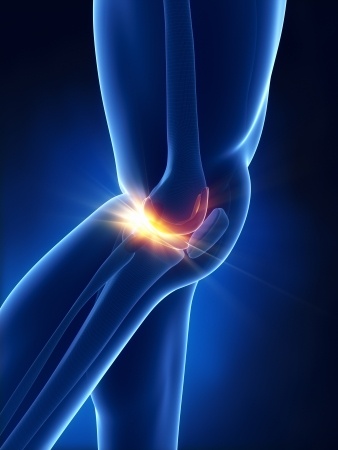
 If you’ve ever managed a fantasy sports team or even if you’re just a fan of pro athletes, no words can strike as much fear in your heart as “torn ACL.” An injured ACL, or anterior cruciate ligament, generally means the end of the sports season for the player. If that player happens to be a vital member of the team, the chances of a championship season often go up in smoke.
ACL injuries aren’t limited to professional athletes. Anyone who plays any sport, from “weekend warriors” playing touch football in the backyard to high school and college athletes, and even those who engage in rigorous exercise can fall victim to one of these injuries. While almost 80 percent of all ACL tears are sports related, in most cases (more than 70 percent) they are not the result of contact but instead caused by the ligament tearing as a result of pivoting or landing incorrectly after a jump.
While conventional wisdom holds that the only way to treat a torn ACL is with surgery, that’s not always the case. Whether or not surgery is required depends largely on the injury’s extent, how well it heals without surgical intervention, and the patient’s age and lifestyle.
ACL: The Basics
Before you can understand why surgery may or may not be necessary in the case of an injured ligament, it’s important to understand what the ACL is and how it can be injured.
The ACL is one of four ligaments the knee that connect the femur, or thigh bone, to the tibia, or shin bone. It runs diagonally through the center of the knee, keeping the leg bones in proper alignment and providing stability when the knee rotates. If the knee rotates incorrectly, such as being pushed into an abnormal position due to a hit from another person or object, or being hyperextended during the landing of a jump or during a sudden change in direction, that stress can actually tear the ligament. The result is described as the knee “giving out” or “popping” followed by pain and swelling. Typically this is not an injury that allows you to keep going through the pain; in most cases, it’s painful to walk or even bend the knee. There are rare cases without contact such as a basketball player hyperextension injury where the player continues to play with a painful knee and the diagnosis is made later, therefore the importance of having the knee evaluated.
Diagnosis and Treatment
Whenever an athlete has a suspected ACL injury, the diagnosis is typically made by an examination with a physician who is experienced in evaluating the knee. The exam will include specific tests for the ACL ligament such as the pivot-shift test. The diagnosis is then usually confirmed with X-rays to rule out a fracture and a MRI to evaluate the soft tissues including the ligaments. If the evaluation reveals a complete tear of the ACL and the knee is unstable on exam most people automatically assume they will need surgery to reconstruct the ligament., Often surgery is the best option; for example, a young athlete who expects to return to competitive pivoting (twisting, cutting) sports will better outcome and have a lower chance of reinjuring with surgical intervention. Typically these athletes, even recreational, continue to have pivoting episodes due to their loose knee causing ongoing pain, swelling and progressive damage. Therefore early surgical intervention is recommended. Other factors that make surgery the best option include the presence of associated injuries to other ligaments and some associated meniscus (cartilage pad) injuries. For those who are not engaged in pivoting sports on a regular basis, no matter the age, non-surgical treatment is typically successful even in young “in shape” individuals. Riding a bicycle, swimming and running in line are aerobic sports that can be achieved without a surgical reconstruction, at least early on. These individuals typically will complete a knee strengthening rehabilitation program by a trainer or physical therapist and wear an ACL brace for athletics.
Physical therapy can help strengthen the muscles surrounding the knee and help the patient regain most of their normal balance, strength and stability. One downside to non-surgical treatment is the chance that they may have pivoting episodes with simple activities of daily living or non-pivoting sports. These individuals then undergo surgery at a later date which delays their ultimate time to regaining their function. Therefore, it is critical to monitor those who remain active and choose a non-surgical pathway.
In the end, the best course of action for any ACL injury is to work with your doctor to develop the plan that works best for you and your needs. However, if you have a relatively sedentary lifestyle or you’re willing to give up the high-demand sports that caused the injury, then focusing on strengthening your injured joint may be a viable and the best treatment option.
About the Author: Charlie Childs was a promising college athlete when an injured ACL took him off the playing field for an entire season. During that time he discovered a passion for writing and although he recovered fully thanks to the treatment of Dr. Ronald Glousman, he opted to forgo football and pursue a career in journalism.
Leave a Reply